
The closest I got to the beach that weekend was on the back of the motorcycle traveling between clients’ homes.
Roatán receives thousands of tourists each year but the island’s largest peak season is now, with Semana Santa (Holy Week) having just passed. From Spring Breakers to retirees, foreign tourists flock to this island off the coast of La Ceiba in larger numbers to enjoy the beautiful beaches that the island has to offer. However, my trip two weeks ago as the peak season got underway served a different purpose.

While most tourists are not able to venture off the beaten path, neighborhoods such as these are where you will find Adelante clients.
The Roatán zone from our La Ceiba Branch Office currently serves over 300 clients, many of whom invest in businesses to serve the tourism industry, while many more run businesses serving the local communities. Despite the luxurious resorts offered to incoming guests, many locals continue to suffer in poverty. One such woman is Adeline.
Adeline is a proud and bold woman who raised eight children on her own and has had two grandsons, 12 and 13 years old, in her care since they were very young. The difficult economic situations she has faced prevented her from being able to learn to read and write and laments that there simply was not enough money to send her children to secondary school.
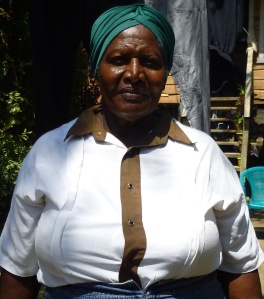
Adeline is a native of Roatán–a Caribbean island known for beautiful beaches and expensive resorts. The poverty that her and many other natives of the island suffer from is often left unseen.
As a native to the island, Adeline is a native English speaker but also speaks Spanish. With greater migration into the island from mainland Honduras, Spanish is becoming more widely spoken there and many natives feel an amount of resentment toward this phenomenon. Because of this, Adeline and the other members of the group were thrilled to get a chance to have me there to chat in English.
I met Adeline while the Roatán Zone Credit Officer was working hard to get credit evaluations and other work done before the Semana Santa work holidays. These evaluations take place prior to each loan cycle to review the needs of each individual and their current economic situation.
While helping Orville with his credit evaluations, I arrived to the following standard question with Adeline, “Do you own your own home?” The answer I received was not what I had expected: “Well I did but three weeks ago it burned down.” Luckily no one had been at home when the fire started but she still has not been able to figure out the source of the fire. Where she lived, she did not have electricity, ruling out an electrical fire and did not have gas for her stove.
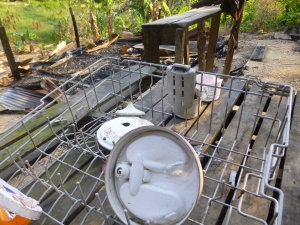
A dish rack and scraps of wood and metal sheeting was all that was left of her home when we returned to the scene three weeks later.
Until she is able to rebuild, Adeline has moved into the home of one of her six sons, about 15-20 minutes away along the unpaved road. She will continue working hard each day at her butcher shop in the market so that she can once again offer a home to her two grandsons, abandoned by their father.

Although pleased to have their grandmother around, Adeline’s grandchildren share in the pain she has suffered from in this recent tragedy.
Despite the various challenges faced by Adeline she continues to grow her business. With each loan cycle, she continues to take on larger amounts and pays back diligently, proving the success she has had within Adelante’s microlending model. Although she has a long way to go to make progress toward a new home, her loan history makes her eligible for our individual loan products. Once she begins rebuilding, Orville hopes to offer her with the support she needs to finish up the construction via a Home Improvement Loan.
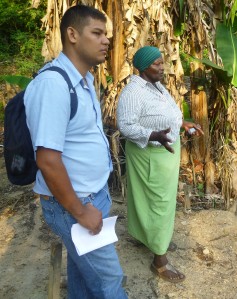
Orville looks on with sadness at all that is left of what was once Adeline’s home.
I was personally amazed by how immediately Orville had responded to her tragedy in order to offer her hope for the future. Bringing our clients’ needs to the forefront and addressing how we can solve them is what we see as vital to successfully operating as a microfinance institution while fulfilling our social mission, and this is exactly what April being the Month of Microfinance is all about.
Her fellow Adelante borrowers also brought forth moral support, immediately displaying concern for what had happened. Adeline is very head strong and independent, which had originally made her reluctant to discuss the fire with her friends. However, the support from each of the women and from Adelante staff like Orville gave her enough confidence to open up and reminded her of just what it means to be part of a solidarity group.


 Adelante Foundation